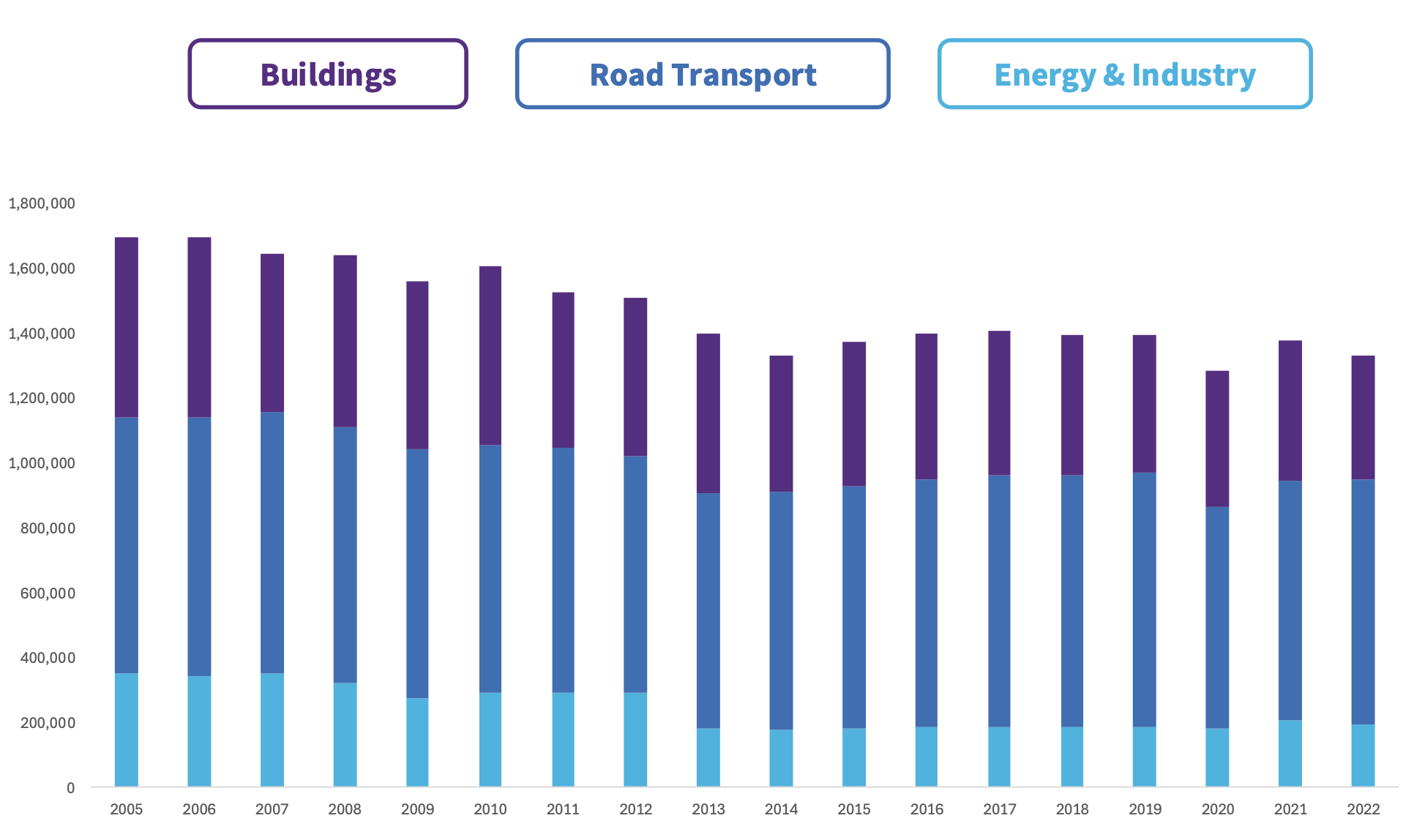
Evolution ETS2 sectors from beginnings of ETS
The evolution of ETS2 sectors from 2005, the start of the EU ETS, to 2022 saw a decline in emissions from 1,696,834 kt of CO₂ to 1,332,699 kt of CO₂, a 21.46% reduction over 18 years. This decrease highlights the impact of regulatory measures, carbon pricing, and technological advancements, driving industries toward cleaner practices and lower carbon intensity.
The continued monitoring of these trends will be critical as ETS2 expands the system to additional sectors, shaping future emissions reductions.
Sectorial Share (2022)
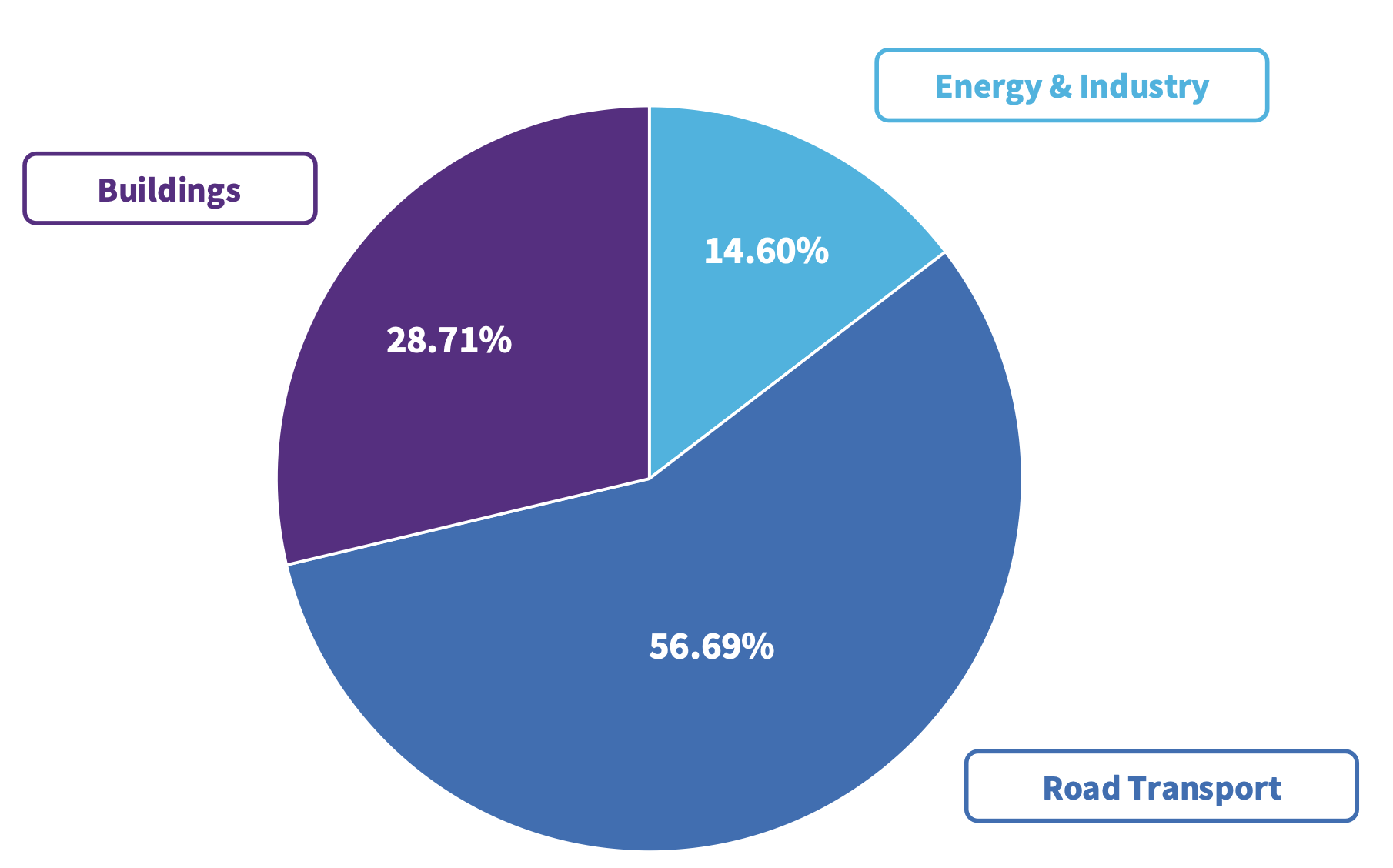
When we delve deeper into the sectoral share of the ETS2 market — or more accurately termed the “pre-market,” as this data reflects 2022 — road transportation emerges as the leading sector. However, the sector’s dominance in terms of emissions within the future ETS2 market has been consistent every single year since 2005.
This historical trend suggests that the EU will likely place the greatest emphasis on decarbonizing road transportation, prioritizing policies and measures aimed at reducing its carbon footprint to meet climate targets.
National Share (top 10)
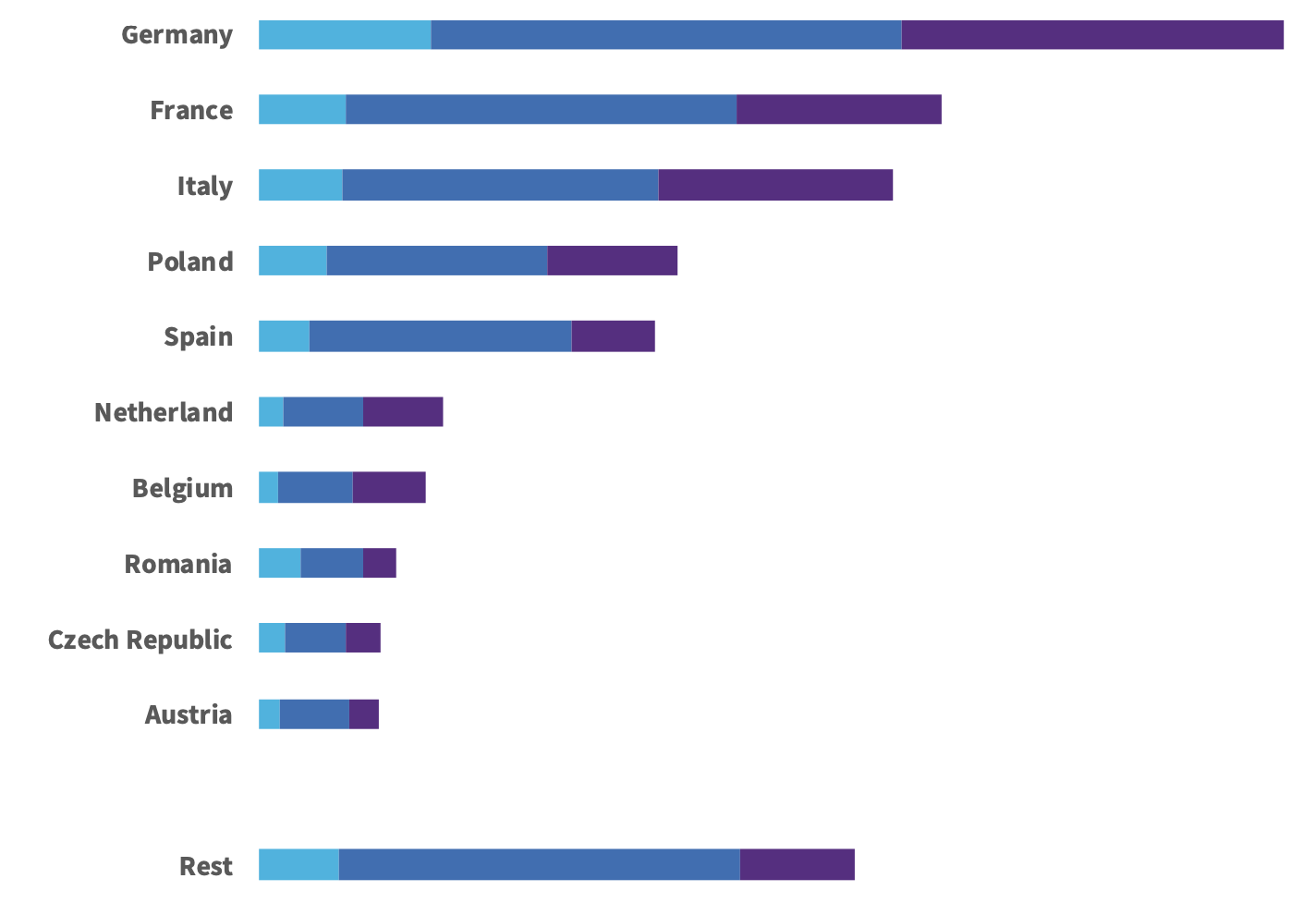
Disclosing emissions data from all 27 EU member states, along with Iceland and Norway — all participants in the upcoming ETS2 market — reveals a clear dominance by the top five countries:
- Germany
- France
- Italy
- Poland
- Spain
Together, these five nations account for the majority of emissions. In contrast, when the emissions from all remaining countries are combined, they represent only about one-third of the historical emissions within the ETS2 framework. This concentration underscores the critical role of the top emitters in shaping the success of decarbonization efforts within the expanded system.