
The EUA market in 2025 is expected to be driven largely by speculative activity, leading to volatility despite stable demand and surplus allowances from REPowerEU. While emissions from the power sector will continue to decline, reducing fundamental EUA demand, speculative buying and investment fund activity could provide short-term bullish momentum. Reform discussions may add further uncertainty, but the market is likely to shift its focus toward the looming 2026 deficit. As the cap tightens and supply declines, speculative positioning is expected to play a key role in shaping price movements, ultimately supporting a long-term uptrend.
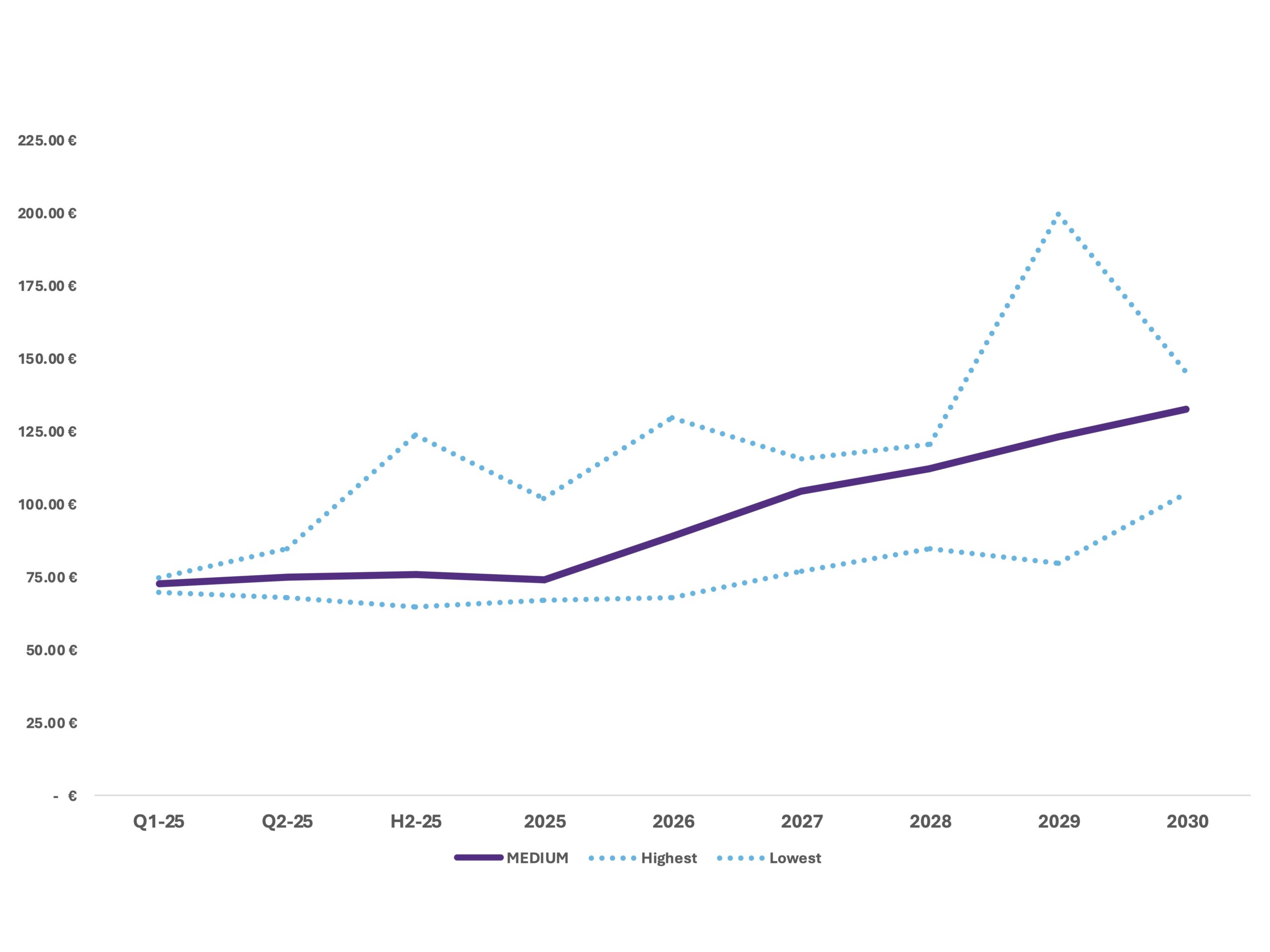
Carbon analysts have raised their EU carbon price forecasts for Phase 4 (2021-30), anticipating that tighter market conditions will start taking effect this year. Current analytical sentiment showed an average increase of ~2% in EUA price expectations for 2025-2030 compared to the previous one which took a place in Q4 2024.
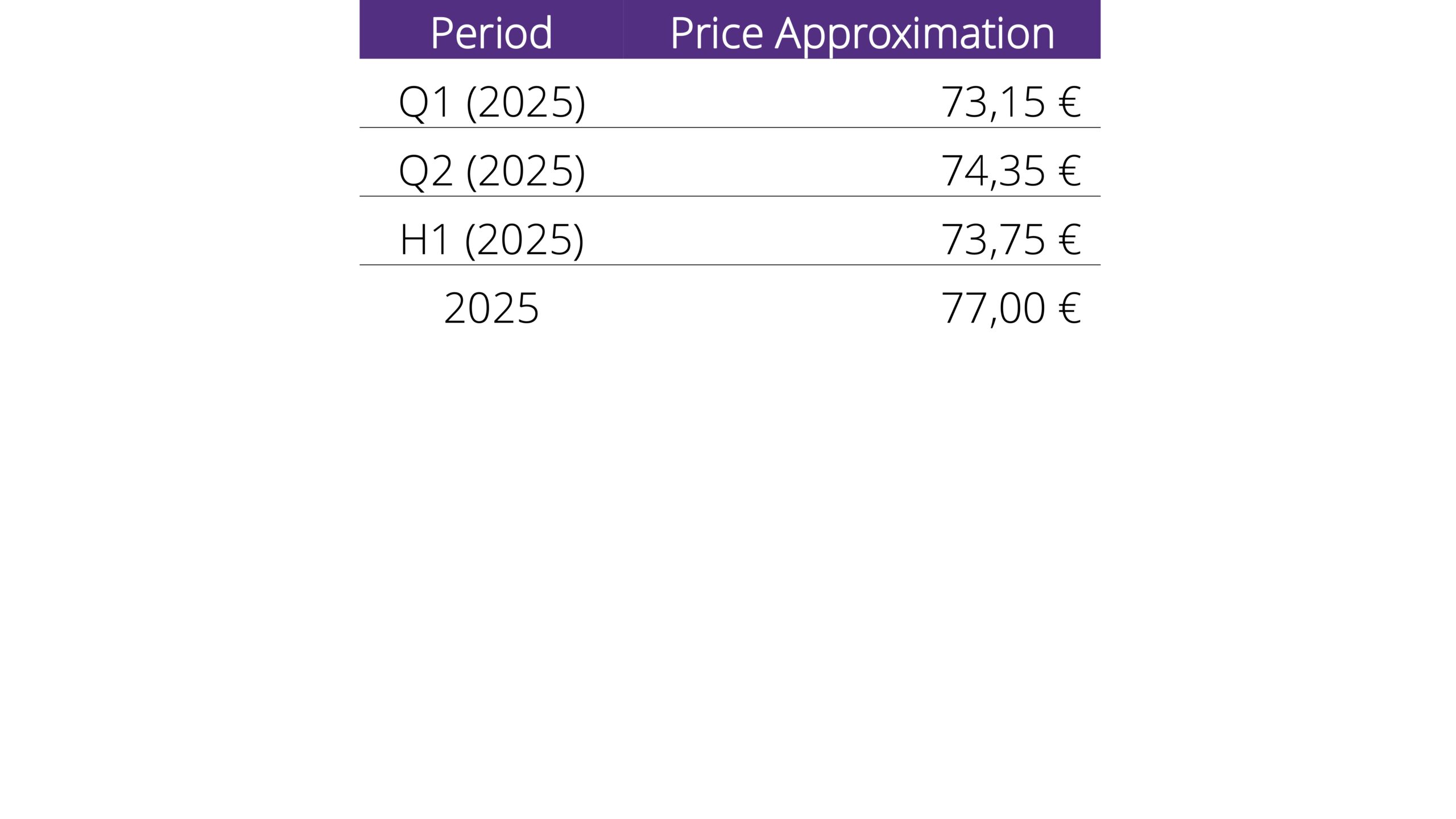
Current Key Market Drivers
The EUA-natural gas price correlation remains crucial. High gas prices could boost EUA demand by increasing coal-fired power generation, while lower gas prices may have the opposite effect.
The EU power sector is expected to continue decarbonizing. The double-digit drop in ETS emissions in 2024 is expected somehow to continue in 2025, so expectation of another renewable energy expansion is high.
Weak industrial demand and sluggish economic recovery may limit EUA price demand from industrials this year.
Political factors, such as Germany’s federal election and potential EU climate policy shifts influenced by a Trump presidency, could impact market sentiment in bearish sense. The European Commission plans a full review of the EU ETS Directive by 2026, which will encompass an evaluation of the MSR’s effectiveness and may lead to further revisions.
Bullish Factors: Why EUA Prices May Rise
Tighter Market Conditions (2026 Onward)
- Emissions cap reductions from the Linear Reduction Factor (LRF).
- Phasing out of free allocations for industries.
- End of REPowerEU permit sales, reducing auction supply.
- Full compliance for shipping (2027) and complete auctioning for aviation (2026) could trigger hedging incentives from these sectors.
Speculative and Long-Term Investor Interest
- Hedge funds and speculative traders increasing long positions, anticipating future scarcity.
- Historical patterns suggest a rally similar to the MSR-driven price surge in 2019.
Power Sector & Fuel Switching
- High gas prices could lead to more coal-based power generation, increasing EUA demand.
- Some analysts expect higher electricity demand from economic recovery and electrification (EVs, hydrogen).
Economic & Policy Developments
- European Central Bank (ECB) interest rate cuts could boost industrial output and emissions.
- EU’s commitment to 2030 decarbonization targets ensures steady market tightening.
- Ongoing Green Industrial Act discussions may introduce new incentives for EUA demand.
Bearish Factors: Why EUA Prices May Struggle
Weak Industrial Demand
- European industrial sectors (chemicals, steel, automotive) remain sluggish, limiting EUA demand.
- Persistent low profit margins reduce emissions from manufacturing.
Strong Renewable Growth & Decarbonization Trends
- Power sector emissions down 13% YoY in 2024, continuing the downtrend.
- Solar and wind energy expansion reducing reliance on fossil fuels.
Abundant Supply in the Near Term (2025-26)
- REPowerEU auctions may extend into late 2025, adding unexpected EUA supply.
- Market Stability Reserve (MSR) still absorbing allowances, preventing major shortages before 2026.
EUA-Gas Correlation Risks
- If natural gas prices fall, coal-to-gas switching could reduce EUA demand.
- Stronger-than-expected LNG imports may ease gas market tightness, keeping EUA prices subdued.
Brief Resume
- Prices are expected to stabilize in 2025, with a gradual rise in H2 as supply tightens.
- 2026 marks a turning point due to structural market changes, likely driving a sustained uptrend.
- Political risks and economic conditions remain major uncertainties affecting price trajectories.